
Residential service
Electrical troubleshooting in Houston
When something electrical stops working and the reason is not obvious, we test the circuit step by step until we find the cause.
What troubleshooting is
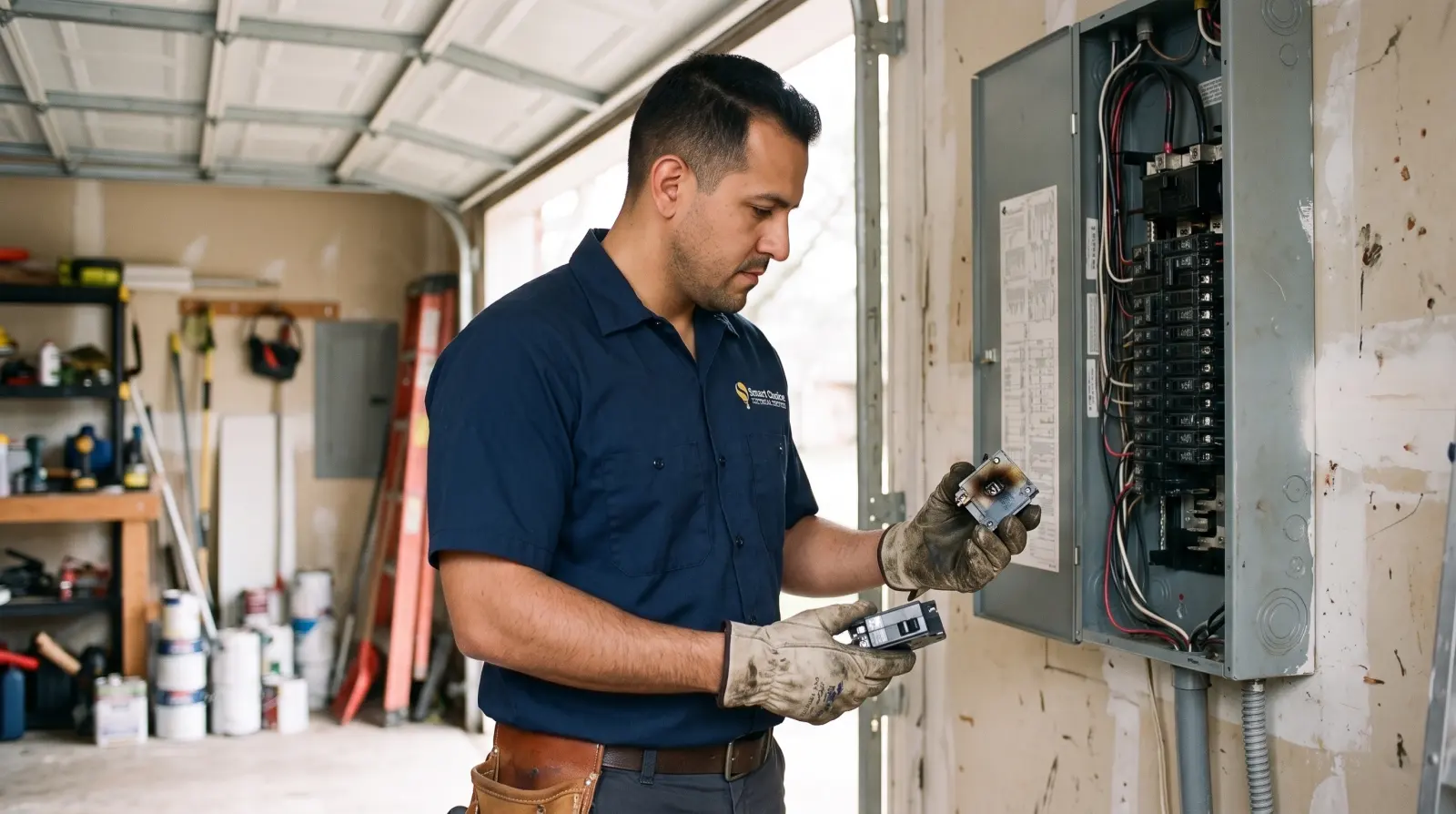
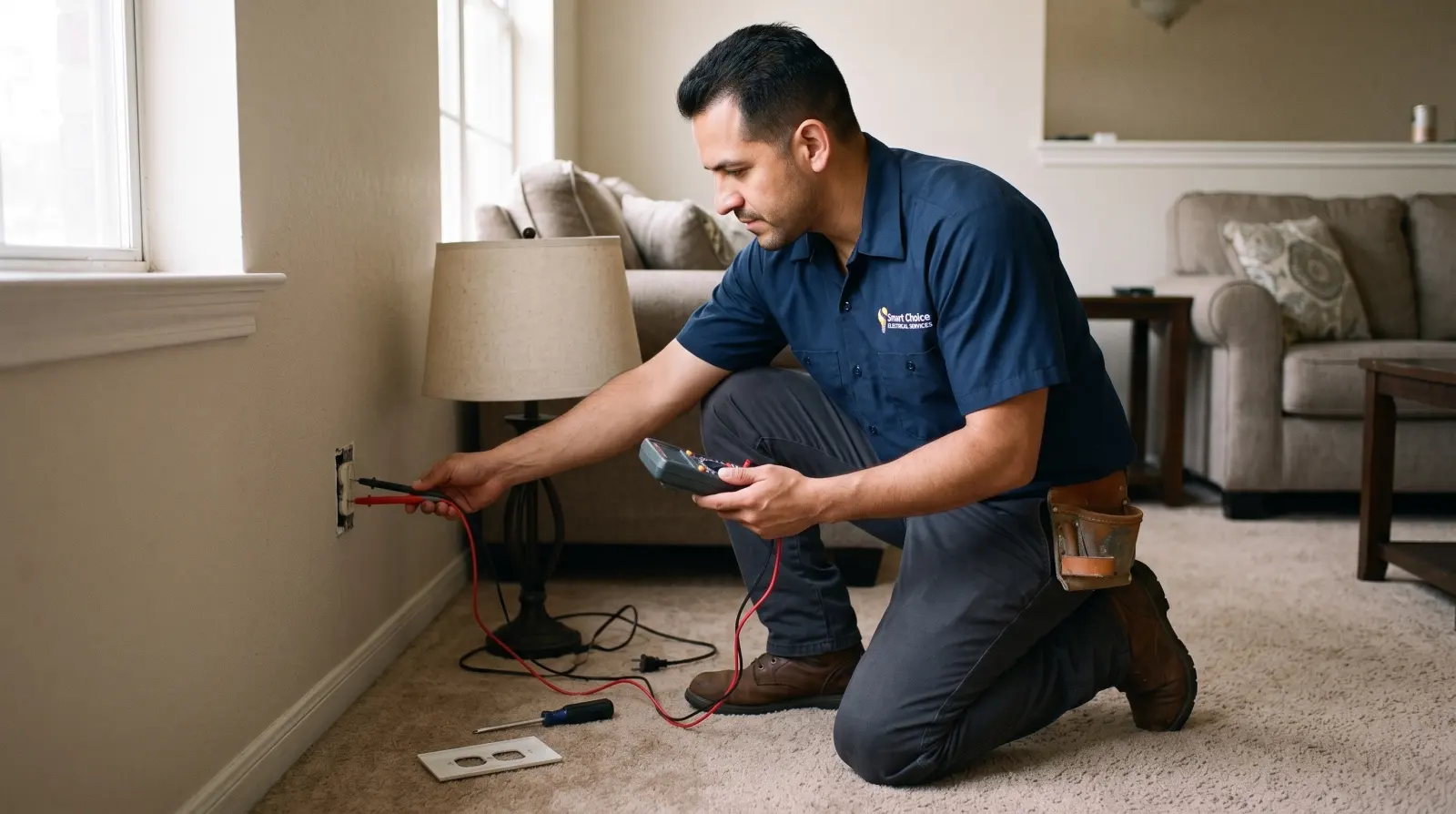
Troubleshooting is diagnosis. Instead of guessing and replacing parts, we test the panel, the circuit and the devices on it to find the exact point where something is wrong: a loose connection, a damaged wire, a failing breaker or an overloaded circuit.
You get an explanation of what we found and a price for the repair before we do it.

Problems we diagnose
- Lights that flicker or dim.
- Outlets or rooms with no power.
- Breakers that trip with no clear reason.
- A burning smell, buzzing or crackling.
- A light or outlet that works only sometimes.
- A mild shock or tingle from an appliance or a switch.
- Higher electric bills with no change in use.
- Power problems after a storm or a water leak.
How the work goes
Describe the problem
Tell us what happens, where, and when it started. Details save diagnosis time.
Test
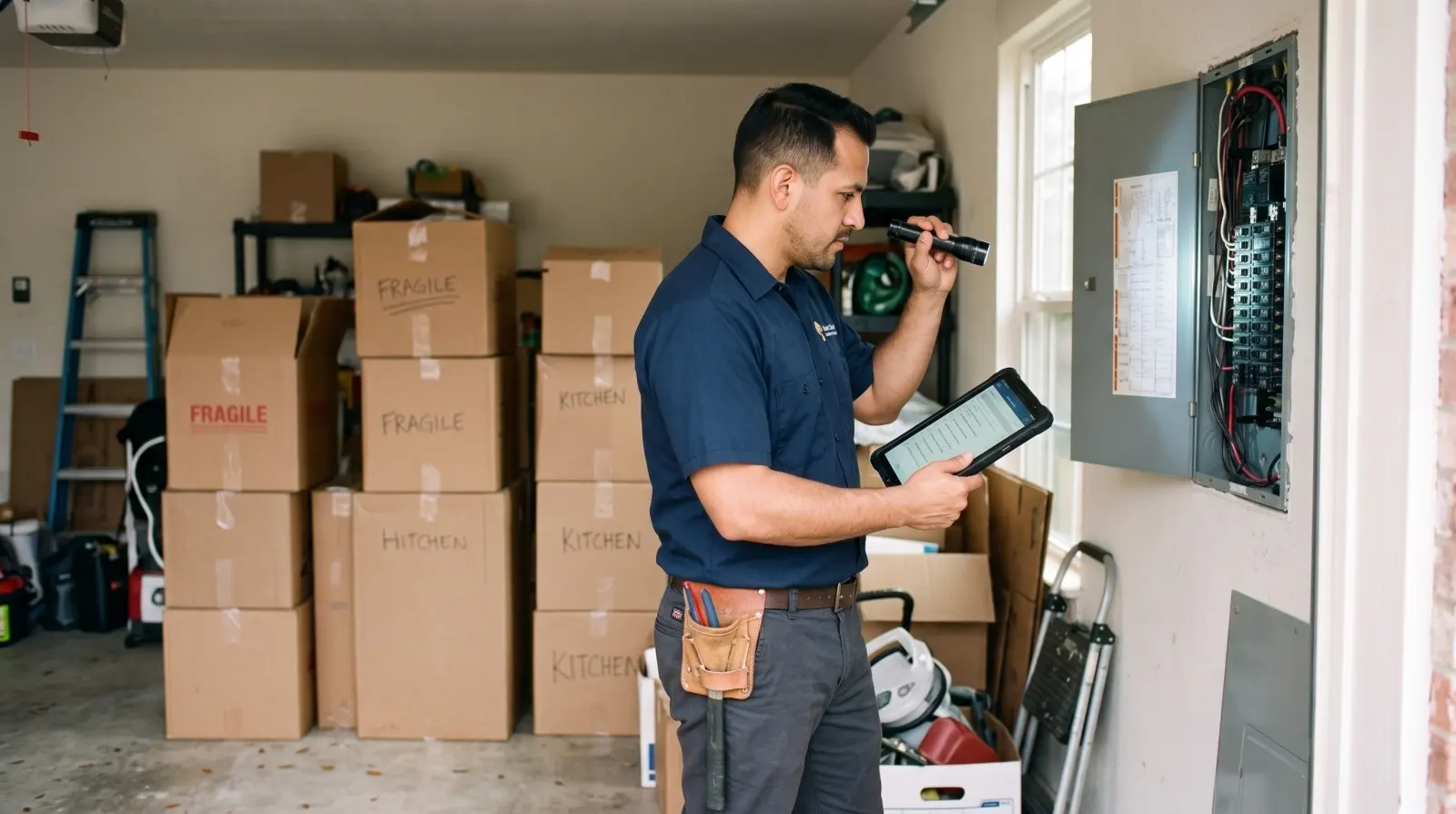
We check the panel and test the affected circuit along its path to find the fault.
Explain
We show you what we found and give you the repair options and the price.
Repair
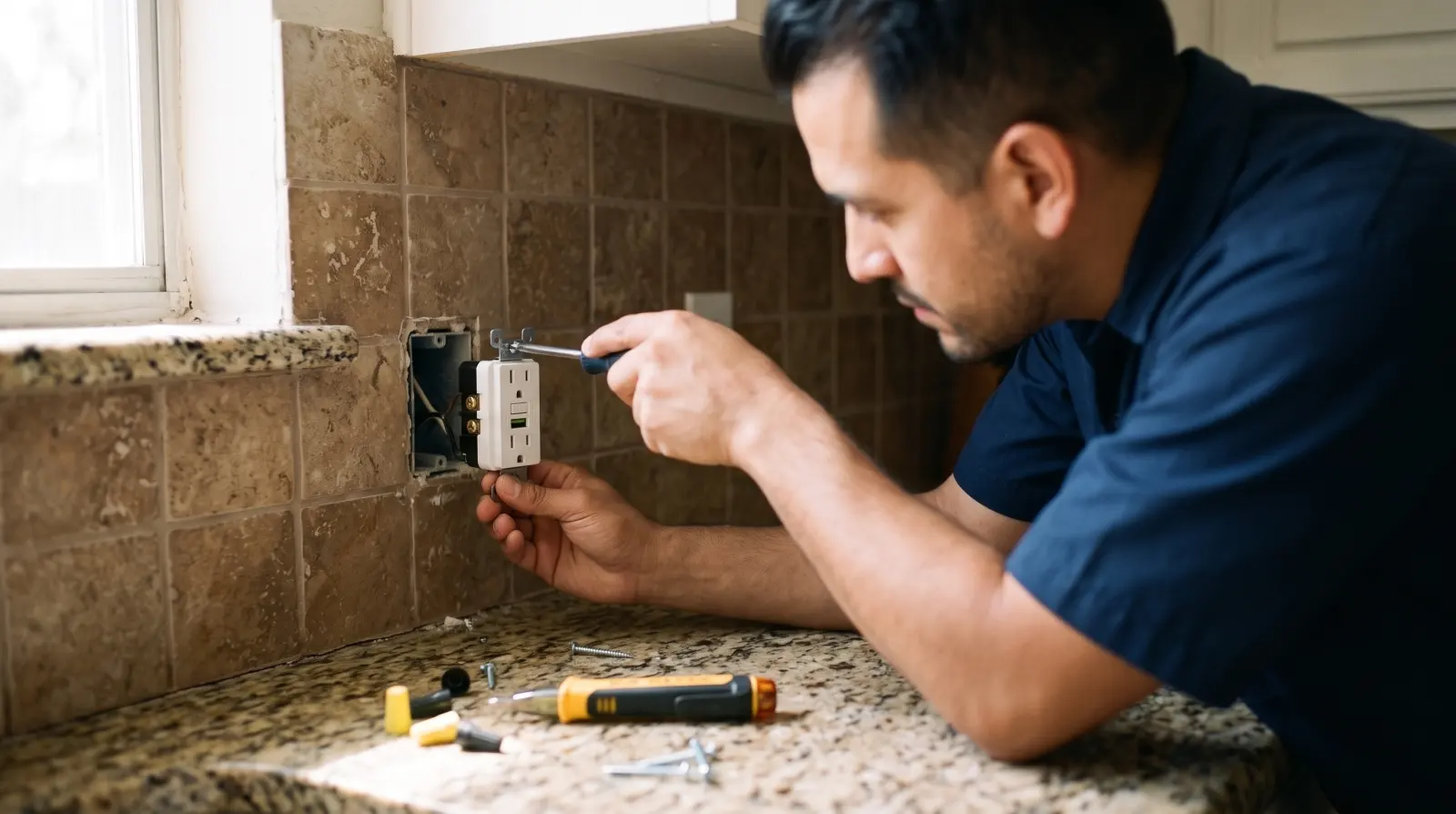
With your approval we make the repair, usually in the same visit, and test again.
How long it takes
Most problems are found within the first hour or two. Faults that come and go, or that are hidden inside walls, can take longer. We keep you informed while we work.
Permits and inspections
Diagnosis and most repairs do not need a permit. If the fix involves new circuits or replacing the panel, a permit applies, and we tell you before starting.
What affects the price
Diagnosis and repair are priced separately, so you know the cost before deciding:
- The time needed to find the fault.
- How accessible the wiring is.
- The parts the repair needs.
- Whether the call is an after-hours emergency.
Frequently asked questions
Why do my lights flicker?
One fixture flickering usually points to the bulb, the fixture or its switch. Flickering across several rooms points to a loose connection at the panel or the service, which should be checked soon.
Half my house has no power. What happened?
Often a tripped breaker or GFCI, a failed main breaker, or a lost leg of power from the utility. Check your breakers first. If they look normal, call us; if your neighbors are also affected, call CenterPoint Energy.
Is a burning smell an emergency?
Yes. Turn off the breaker for that area if you can do it safely, and call us. If you see smoke or fire, leave the house and call 911.
Can you find a problem that only happens sometimes?
Yes, though it can take more time. Notes on when it happens, such as when the AC runs or when it rains, help us find it faster.